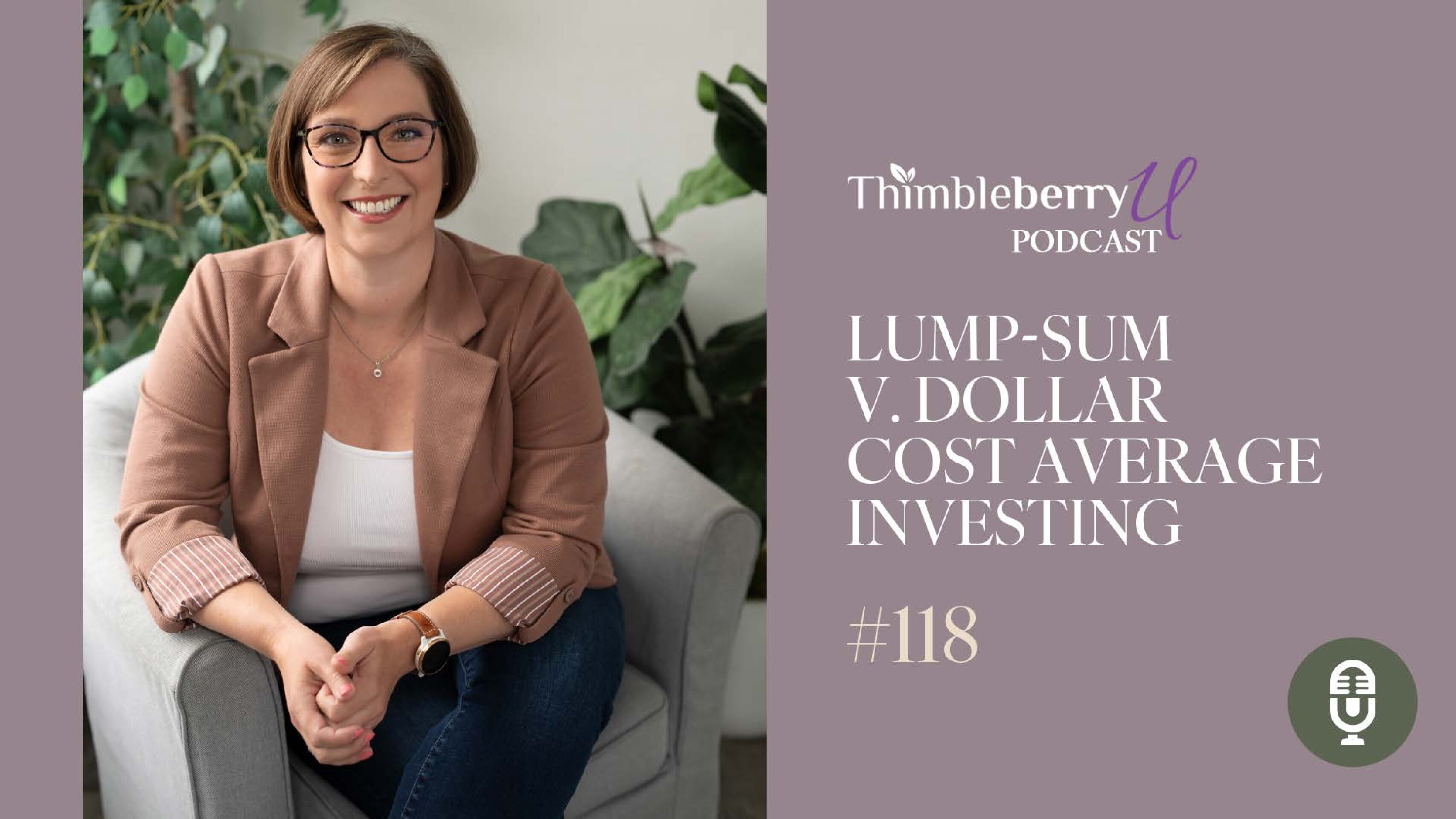
Today, Amy and Jag delve into the contrasting strategies of lump-sum investing and dollar-cost averaging (DCA). Amy starts by defining lump-sum investing as the practice of investing a large amount of money all at once, like a $100,000 bonus, while dollar-cost averaging involves spreading the investment over time, such as $10,000 a month for 10 months.
Amy explains that dollar-cost averaging helps mitigate risk by buying more shares when prices are low and fewer when prices are high, thereby balancing the overall cost. This strategy is particularly useful for those wary of market volatility. On the other hand, lump-sum investing can yield higher returns because it gets the money working in the market immediately, a point backed by Vanguard research showing that lump-sum investing outperforms DCA 68% of the time over one-year and ten-year periods.
We discuss why an investor might choose one strategy over the other. Lump-sum investing offers simplicity and higher potential returns, but it comes with the risk of market downturns immediately after the investment. Dollar-cost averaging, while potentially yielding lower returns, reduces this risk and provides psychological comfort, preventing panic in the face of market drops.
Jag and his wife employ both strategies. She invests consistently each month through her 401(k), practicing dollar-cost averaging, while Jag, as a self-employed individual, saves throughout the year and makes a lump-sum investment into his SEP IRA at year’s end.
Market conditions also play a significant role in choosing a strategy. In a bull market, lump-sum investing tends to perform better as the market is generally rising. During volatile or bear markets, dollar-cost averaging can be advantageous as it allows investors to benefit from lower prices over time.
Amy highlights historical performance, noting that lump-sum investing generally yields higher returns over a 10-year period, with 66-67% success across markets such as the US, UK, and Australia. However, risk-averse investors, or those who need time to adjust psychologically to seeing their cash reserves drop significantly, might prefer dollar-cost averaging.
Practical tips for deciding between these strategies include assessing personal risk tolerance, considering one’s financial situation and goals, avoiding market timing, and seeking professional advice. The key takeaway is that there’s no absolute right or wrong choice between lump sum investing and dollar-cost averaging. The best decision is the one that aligns with personal comfort and long-term financial objectives.
For further advice, listeners can reach out to Amy and her team at Thimbleberry Financial via their website or phone. It’s important to remember that investing should always be approached with a long-term focus and in consultation with financial professionals
To get in touch with Amy and her team at Thimbleberry Financial, call 503-610-6510 or visit thimbleberryfinancial.com. The ThimbleberryU Podcast is produced by JAG Podcast Productions – https://jagpodcastproductions.com/